
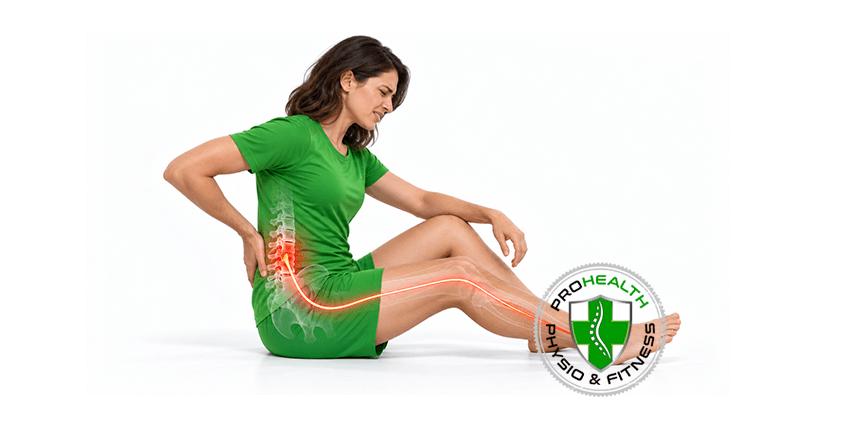
Back pain and sciatica are common conditions that can affect your ability to work, exercise and complete everyday activities comfortably. Many people experience lower back pain that spreads into the buttock, thigh, calf or foot and wonder whether they have sciatica. Understanding the causes, symptoms and treatment options can help you seek the right care and return to normal activities more confidently.
Direct answer: Back pain and sciatica often occur when a nerve in the lower back becomes irritated or compressed, causing pain that may travel from the back into the leg. Physiotherapy, exercise and appropriate activity modification may help reduce symptoms, improve movement and support recovery, depending on the underlying cause.
What Is Sciatica?
Sciatica is a term used to describe symptoms caused by irritation of the sciatic nerve or one of the nerve roots that contribute to it.
The sciatic nerve is the largest nerve in the body. It travels from the lower back through the buttocks and down each leg. When irritated, it can produce symptoms that extend beyond the lower back and into the leg.
Sciatica is not a diagnosis itself. Rather, it describes a pattern of symptoms that may arise from several underlying conditions.
What Are The Symptoms Of Sciatica?
Sciatica symptoms vary between individuals but commonly include:
- Lower back pain
- Pain travelling into the buttock
- Pain extending into the thigh, calf or foot
- Tingling or pins and needles
- Numbness in parts of the leg
- Burning sensations
- Muscle weakness in some cases
Many people notice symptoms are worse when sitting for long periods, bending forward, coughing or sneezing.
The severity and location of symptoms depend on which nerve structures are affected.
What Causes Back Pain And Sciatica?
Several conditions may contribute to back pain and sciatica.
Disc Related Irritation
A disc bulge or disc injury may irritate a nearby nerve root, leading to symptoms travelling into the leg.
While disc issues are a common contributor, not all back pain or leg pain is caused by a disc problem.
Spinal Stenosis
Spinal stenosis refers to narrowing around the spinal nerves. This condition becomes more common with age and can contribute to leg pain, numbness or weakness.
Joint Related Conditions
Changes in the joints of the lower back may sometimes contribute to nerve irritation and associated symptoms.
Muscle And Soft Tissue Factors
Tightness or irritation in structures around the hip and pelvis may occasionally mimic symptoms that feel similar to sciatica.
Other Medical Conditions
Less commonly, infections, inflammatory conditions or other neurological disorders may cause symptoms similar to sciatica.
A thorough assessment is important to determine the likely source of symptoms.
Can Physiotherapy Help Sciatica?
Physiotherapy may help identify contributing factors and provide an individualised management plan.
Depending on your presentation, treatment may include:
- Education about your condition
- Exercise therapy
- Mobility exercises
- Strengthening programs
- Activity modification advice
- Postural guidance
- Manual therapy where appropriate
- Return to work and sport planning
The goal is to help reduce symptoms, improve movement and restore confidence in everyday activities.
How Can Exercise Physiology Help?
An Accredited Exercise Physiologist can support longer term recovery through structured exercise programs tailored to your needs.
Exercise physiology may help:
- Improve physical conditioning
- Build core and lower limb strength
- Increase exercise confidence
- Support recovery after injury
- Reduce the impact of recurrent episodes of back pain
Programs are adapted to your symptoms, medical history and functional goals.
What Happens During A Physiotherapy Assessment?
Your physiotherapist may assess:
- The location and behaviour of your symptoms
- Movement of the spine and lower limbs
- Strength and flexibility
- Neurological function
- Functional activities
- Work and lifestyle demands
This assessment helps guide treatment recommendations and determine whether further medical investigation may be required.
Self Management Strategies For Sciatica
Many people benefit from practical self management approaches.
These may include:
- Remaining active where possible
- Avoiding prolonged bed rest
- Taking regular movement breaks
- Following prescribed exercises
- Gradually increasing activity levels
- Managing sitting time
- Maintaining general fitness
The most appropriate approach varies according to the cause and severity of symptoms.
When Should You See A Physiotherapist?
Consider seeking assessment if:
- Leg symptoms persist for more than a few days
- Pain is limiting daily activities
- Symptoms continue to worsen
- You are avoiding movement because of pain
- Episodes keep recurring
- You are unsure which exercises are appropriate
Early assessment may help identify contributing factors and provide guidance on safe management strategies.
Warning Signs Requiring Urgent Medical Attention
Seek urgent medical assessment if symptoms are accompanied by:
- Loss of bladder or bowel control
- Numbness around the groin or saddle area
- Significant or progressive leg weakness
- Severe trauma
- Unexplained weight loss
- Fever or feeling generally unwell
- Severe worsening pain
These symptoms require prompt medical review.
Frequently Asked Questions
Is sciatica always caused by a disc bulge?
No. While disc related irritation is a common cause, sciatica symptoms may also be associated with spinal stenosis, joint related changes and other conditions affecting the nerves in the lower back.
How long does sciatica last?
Recovery times vary significantly. Some people improve within weeks, while others experience symptoms for longer periods. The duration depends on the cause, symptom severity and individual circumstances.
Is walking good for sciatica?
Walking is often beneficial because it encourages movement and supports general fitness. However, the amount of walking should be guided by your symptoms and professional advice if symptoms are severe.
Should I rest if I have sciatica?
Extended bed rest is generally not recommended for most cases. Maintaining appropriate activity levels is often associated with better outcomes than prolonged inactivity.
Will I need surgery for sciatica?
Most people with sciatica improve with conservative management such as physiotherapy, exercise and activity modification. Surgery may be considered in selected cases depending on symptoms, neurological findings and medical assessment.
Need Help?
If you are experiencing back pain and sciatica, the team at PROHEALTH PHYSIO & FITNESS (EP) can help. Our physiotherapists and Accredited Exercise Physiologists provide comprehensive assessments to identify contributing factors and develop an individual treatment and exercise plan.
Whether your symptoms are recent, recurring or affecting your work, sport or daily activities, we can help you work towards improved movement, reduced discomfort and better physical function at our Lane Cove, Sydney clinic.
Further Information
Source: Health direct Australia
Title: Sciatica
Read time: Approximately 6 minutes
Source: Better Health Channel
Title: Sciatica
Read time: Approximately 5 minutes
Source: Australian Physiotherapy Association
Title: Physiotherapy and Back Pain
Read time: Approximately 5 minutes